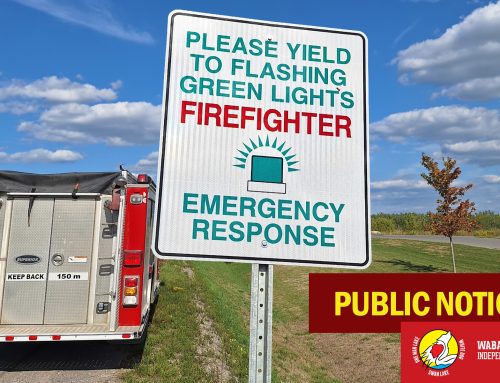
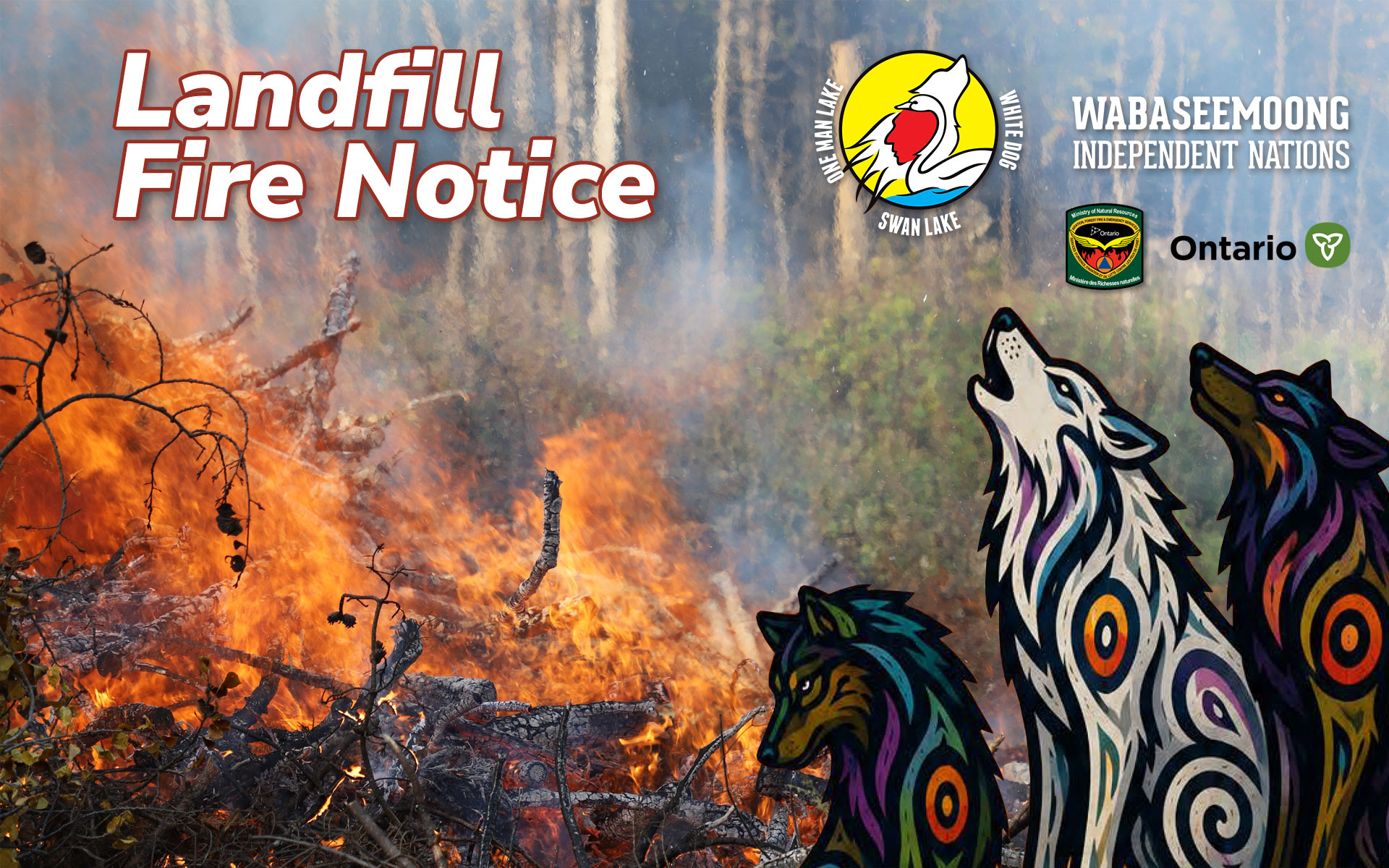
Please be advised that the Wabaseemoong landfill is currently experiencing a fire. For your safety, please use the bins in community until the fire is contained and to allow crews to work safely.
With wildfires affecting communities across Northwestern Ontario, firefighting resources are extremely limited.
We ask everyone to do their part to help reduce the risk of fires:
🔥Never dispose of hot ashes or burn materials at the landfill.
🚫 Avoid any activity that could accidentally start a fire.
💛 Report any signs of smoke or fire immediately.
Thank you for your patience and cooperation as we work to manage this situation safely
More information on Fire prevention and mitigation at community waste disposal sites – from the Aviation, Forest Fire and Emergency Services department of the Ministry of Natural Resources.
First Nation community waste stewardship
Many First Nation communities use traditional land knowledge to manage waste disposal sites safely. Open burning or accidental ignition at community waste disposal sites (i.e. landfill or dump) can lead to fire escape that may threaten community safety, property, and nearby forested areas. The following practices, combined with local knowledge can support safer waste disposal site use in remote First Nation communities by reducing the risk of wildland fires spreading.
Reducing the risks of wildland fire
Fires can spread from waste sites to forests or communities. These practices help reduce that risk:
- Awareness of fire hazard conditions
Avoid using open fires during windy conditions or when fire hazard danger is high, especially in spring. - Vegetation stewardship practices
Fire can spread quickly into nearby forests. Thinning and pruning of vegetation at the forest edge reduces fuel and can slow the spread.
Community waste site precautions
Use of fire-safe waste management practices such as grading soil, burying waste, and clearing vegetation are effective tools to reduce risk.
- Maintain a cleared area and create defensible space
Use heavy machinery to clear vegetation and debris at least 1.5 metres around the waste sites. This can help slow fires from spreading to forests or buildings. Ensure waste is deposited in the designated waste site, and not in surrounding forested areas. - Use water-based protection tools
Sprinkler systems can be used to create a moisture barrier around the waste site during hazardous conditions, helping to prevent fire from starting, and mitigate the intensity of the fire by slowing its spread.
Community fire preparedness
Work with AFFES and community leadership to ensure emergency contact information is up to date and posted on site. Ensure quick access to essential wildland fire suppression equipment such as pumps, hoses, and shovels to support an effective local initial response in the event of a fire escape. Developing a Community Wildland Fire Protection Plan (CWPP) helps in preparing and planning for wildland fire, by assessing the wildland fire risk, and developing mitigation strategies.
Community mitigation principles
Remove, or reduce vegetation, and install water-protection tools, such as sprinklers, at the waste site and on nearby homes, schools, dams, warehouses, and other infrastructure. Learn more about FireSmart Canada’s risk reduction program at Ontario.ca/FireSmart or
FireSmartCanada.ca
Strengthen community protection and resiliency
Lower community risk from wildland fire by burning only during low fire hazard conditions, having water-protection tools available, and supporting community members to be trained, engaged and prepared. Combustible materials such as brush or untreated wood can be placed in a designated area separate from the waste disposal site, allowing them to be safely burned when conditions permit. Don’t burn waste disposal sites. Smoke generated by burning waste is harmful to the environment and to both first responders and the public.
ontario.ca/forestfires @ONforestfires